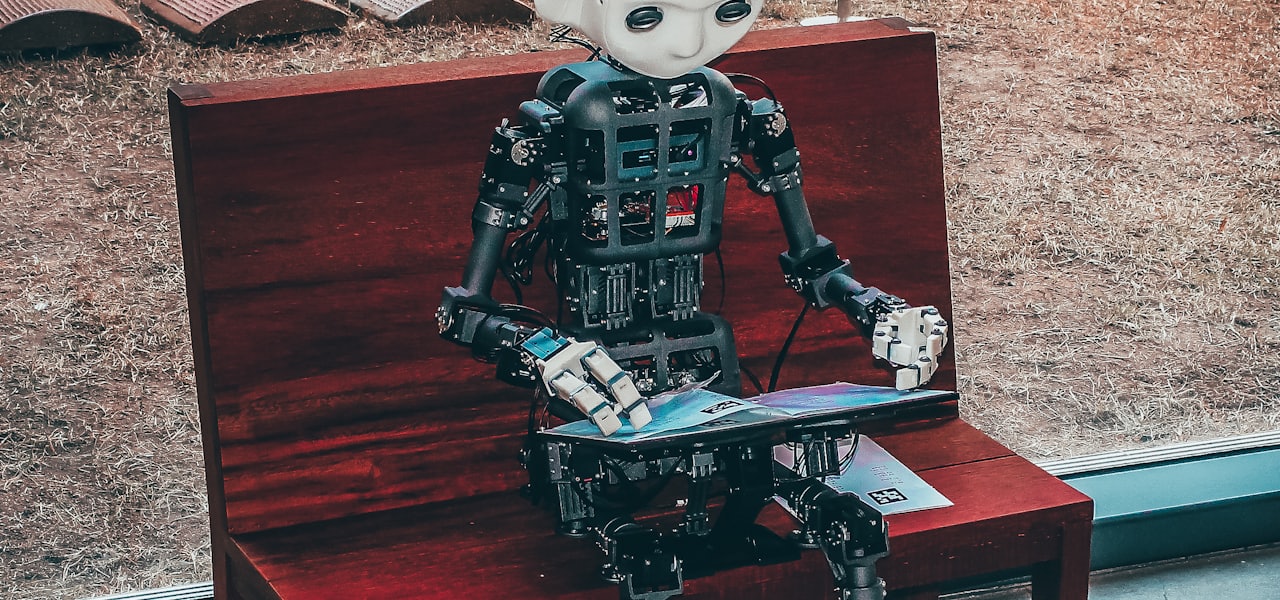
In search of the best AI pair programmer? An AI pair programmer is software that uses machine learning to help you get more done — it turns a rough idea into a polished result in seconds. When choosing one, weigh output quality, pricing, export formats, and how well it fits the tools you already use. Whether you are a beginner or a pro, the right AI pair programmer slots into your workflow and pays for itself fast. We tested the leading options and ranked them by quality, value, and ease of use.
Screen space directional occlusion
Screen space directional occlusion (SSDO) is a computer graphics technique enhancing screen space ambient occlusion (SSAO) by taking direction into account to sample the ambient light (both the light coming directly at an object, as well as the light reflected off of the object directly behind it), to better approximate global illumination. SSDO was introduced by Tobias Ritschel, Thorsten Grosch, and Hans-Peter Seidel in their 2009 ACM Symposium on Interactive 3D Graphics and Games paper Approximating dynamic global illumination in image space, which describes it as extending SSAO to directional occlusion with one diffuse indirect bounce of light; later literature notes that SSDO still suffers from common screen-space artifacts such as noise and banding. == Method == The original SSDO paper describes a two-pass screen-space approach, with one pass for direct lighting and a second pass for indirect bounces. Later literature describes SSDO as assuming a general shadowing direction that allows color bleeding and a single light bounce.
Firefox Lockwise
Firefox Lockwise (formerly Lockbox) is a deprecated password manager for the Firefox web browser, as well as the mobile operating systems iOS and Android. On desktop, Lockwise was simply part of Firefox, whereas on iOS and Android it was available as a standalone app. If Firefox Sync was activated (with a Firefox account), then Lockwise synced passwords between Firefox installations across devices. It also featured a built-in random password generator. The application and branding have since been "phased out." == History == Developed by Mozilla, it was originally named Firefox Lockbox in 2018. It was renamed "Lockwise" in May 2019. It was introduced for iOS on 10 July 2018 as part of the Test Pilot program. On 26 March 2019, it was released for Android. On desktop, Lockwise started out as a browser addon. Alphas were released between March and August 2019. Since Firefox version 70, Lockwise has been integrated into the browser (accessible at about:logins), having replaced a basic password manager presented in a popup window. Mozilla ended support for Firefox Lockwise on December 13, 2021. As of January 2026, Lockwise is still fully functional on Android to this day.
Firefox Lockwise
Firefox Lockwise (formerly Lockbox) is a deprecated password manager for the Firefox web browser, as well as the mobile operating systems iOS and Android. On desktop, Lockwise was simply part of Firefox, whereas on iOS and Android it was available as a standalone app. If Firefox Sync was activated (with a Firefox account), then Lockwise synced passwords between Firefox installations across devices. It also featured a built-in random password generator. The application and branding have since been "phased out." == History == Developed by Mozilla, it was originally named Firefox Lockbox in 2018. It was renamed "Lockwise" in May 2019. It was introduced for iOS on 10 July 2018 as part of the Test Pilot program. On 26 March 2019, it was released for Android. On desktop, Lockwise started out as a browser addon. Alphas were released between March and August 2019. Since Firefox version 70, Lockwise has been integrated into the browser (accessible at about:logins), having replaced a basic password manager presented in a popup window. Mozilla ended support for Firefox Lockwise on December 13, 2021. As of January 2026, Lockwise is still fully functional on Android to this day.
Standard test image
A standard test image is a digital image file used across different institutions to test image processing and image compression algorithms. By using the same standard test images, different labs are able to compare results, both visually and quantitatively. The images are in many cases chosen to represent natural or typical images that a class of processing techniques would need to deal with. Other test images are chosen because they present a range of challenges to image reconstruction algorithms, such as the reproduction of fine detail and textures, sharp transitions and edges, and uniform regions. == Historical origins == Test images as transmission system calibration material probably date back to the original Paris to Lyon pantelegraph link. Analogue fax equipment (and photographic equipment for the printing trade) were the largest user groups of the standardized image for calibration technology until the coming of television and digital image transmission systems. == Common test image resolutions == The standard resolution of the images is usually 512×512 or 720×576. Most of these images are available as TIFF files from the University of Southern California's Signal and Image Processing Institute. Kodak has released 768×512 images, available as PNGs, that was originally on Photo CD with higher resolution, that are widely used for comparing image compression techniques.
List of C++ software and tools
This is a list of notable software and programming tools for the C++ programming language, including libraries, web frameworks, programming language implementations, compilers, integrated development environments (IDEs), and other related software development utilities. == Compilers and IDEs == AMD Optimizing C/C++ Compiler — proprietary fork of LLVM + Clang for Linux C++Builder — rapid application development (RAD) environment Clang – compiler front end for C, C++, and Objective-C, part of LLVM CLion — C++ IDE by JetBrains Code::Blocks — open-source cross-platform IDE that supports multiple compilers including GCC, Clang and Visual C++ CodeLite — cross-platform IDE for the C/C++ programming languages using the wxWidgets toolkit CodeSynthesis XSD – XML Data Binding compiler Dev-C++ — MinGW or TDM-GCC 64bit port of the GCC as its compiler GCC – GNU Compiler Collection Intel C++ Compiler – proprietary high-performance compiler by Intel KDevelop — IDE part of the KDE project and is based on KDE Frameworks and Qt, the C/C++ backend uses Clang. Microsoft Visual C++ – proprietary C++ compiler and IDE for Windows Oracle Developer Studio — Solaris, OpenSolaris, RHEL, and Oracle Linux operating systems. Qt Creator — part of the SDK for the Qt GUI application development framework and uses the Qt API SlickEdit — text editor and IDE Turbo C++ – legacy C++ IDE and compiler popular in the 1990s Understand — IDE that enables static code analysis through an array of visuals, documentation, and metric tools. Visual Studio — integrated development environment by Microsoft that supports C++ Visual Studio Code — integrated development environment by Microsoft that supports C++ Xcode — Apple IDE to develop macOS, iOS, iPadOS, watchOS, tvOS, and visionOS that supports C++ source code. == Debuggers == Allinea DDT – a graphical debugger dbx — a proprietary source-level debugger GNU Debugger – portable debugger that runs on many Unix-like systems Modular Debugger — a C/C++ source level debugger for Solaris and derivates Undo LiveRecorder — time travel debugger == Libraries == Active Template Library – template-based C++ classes developed by Microsoft Apache MXNet — deep learning framework Apache Xerces – parsing, validating, and serializing and manipulating XML. Asio — networking and low-level I/O library Bitpit — scientific computing and mesh manipulation library Boost — collection of peer-reviewed libraries Botan — cryptography library C++ AMP – easy way to write programs that compile and execute on data-parallel hardware, such as graphics cards and GPUs C++ Standard Library — standard library for the language C++/WinRT — library for Microsoft's Windows Runtime platform, designed to provide access to modern Windows APIs. C3D Toolkit — geometric modeling kernel Caffe — deep learning framework CAPD — library for rigorous numerics and dynamical systems Cassowary — constraint-solving toolkit that efficiently solves systems of linear equalities and inequalities Cinder — library for creative coding ClanLib — cross-platform game SDK CMU Sphinx — speech recognition system Crypto++ — cryptographic algorithms library Dlib — general-purpose cross-platform library Dune — partial differential equations using grid-based methods fastText — text representation and text classification library FLTK — GUI toolkit Geospatial Data Abstraction Library — geospatial data access library GDCM — image library General Polygon Clipper — polygon clipping library GiNaC — computer algebra system that uses Class Library for Numbers for implementing arbitrary-precision arithmetic GLFW — OpenGL and window management library HarfBuzz — text rendering and typesetting library High Efficiency Image File Format — digital container format for storing individual digital images and image sequences ITK — image analysis library Integrated Performance Primitives — domain-specific functions that are highly optimized for diverse Intel architectures Jackets library — GPU computing library JSBSim — open-source flight dynamics model JUCE — framework for audio applications KDE Frameworks — collection of libraries from the KDE project KFRlib — digital signal processing framework LEMON — library for optimization and graph problems LevelDB — key–value database library Libdash — MPEG-DASH streaming library libLAS — reading and writing geospatial data encoded in the ASPRS laser (LAS) file format libsigc++ — typesafe callbacks LibRaw — free and open-source software library for reading raw files from digital cameras libSBML — application programming interface (API) for the SBML (Systems Biology Markup Language) LIBSVM — sequential minimal optimization (SMO) algorithm for kernelized support vector machines Libx — DirectX .X files graphics library Loki — collection of design patterns LIVE555 — multimedia streaming library Metakit — embedded database library Microsoft Cognitive Toolkit — deep learning toolkit Microsoft Foundation Class Library — object-oriented library for developing desktop applications for Windows Microsoft SEAL — homomorphic encryption library mlpack — machine learning and AI library Mobile Robot Programming Toolkit — robotics research library Object Windows Library — Object Windows Library, superseded by VCL Open Cascade — CAD and 3D modeling library Open Asset Import Library — 3D model import library to provide a common API for different 3D asset file formats OpenCV – computer vision and machine learning library OpenFOAM — computational fluid dynamics toolkit OpenH264 — real-time encoding and decoding video streams in the H.264/MPEG-4 AVC format OpenImageIO — image processing library Open Inventor — higher layer of programming for OpenGL OpenNN — neural networks library OpenVDB — sparse volume data library openFrameworks — creative coding toolkit OpenRTM-aist — robotics middleware library Oracle Template Library — database access that supports IBM Db2 and Open Database Connectivity Orfeo toolbox — remote sensing image processing library OR-Tools — operations research and optimization library Parallel Augmented Maps — ordered sets, ordered maps, and augmented maps. Parallel Patterns Library — Microsoft library that provides features for multicore programming PhysX — physics simulation engine POCO C++ Libraries — general-purpose libraries for software development Poppler — PDF rendering library Protocol Buffers — data serialization library Qt — cross-platform widget toolkit QuantLib — quantitative finance library RocksDB — key–value database library ROOT — data analysis framework from CERN ROS — robotics middleware Scintilla — source code editing component SDL – Simple DirectMedia Layer, cross-platform development library for multimedia applications SFML – Simple and Fast Multimedia Library Shark – open-source machine learning library Shogun — machine learning toolbox Skia — 2D graphics library Snappy — compression library Sound Object Library — music and audio development Standard Template Library — library of containers and algorithms Stapl — parallel computing library SymbolicC++ — symbolic computation library TerraLib — GIS library Tesseract OCR — optical character recognition engine Threading Building Blocks — parallel computing library ThreadWeaver — concurrency framework Tiny-dnn — lightweight deep learning library TinyXML — lightweight XML parser Tkrzw — key–value databases VTD-XML — XML processing library wxWidgets — cross-platform GUI toolkit x265 — video encoding library for HEVC XGBoost — gradient boosting library Windows Template Library — Win32 development === Mathematical and numerical libraries === == Tools == Akonadi — a C++/Qt framework and storage service for personal information management BALL – framework and set of algorithms and data structures for molecular modelling and computational structural bioinformatics Boehm garbage collector – conservative garbage collector CEGUI — C++ GUI library ClanLib – video game SDK CMake — cross-platform build system for C++ projects Confidential Consortium Framework – blockchain infrastructure framework DaviX – WebDAV client Doxygen — documentation generator for C++ and other languages FLTK — Fast Light Toolkit, cross-platform GUI library Fox toolkit — C++ GUI toolkit GDB — GNU Project debugger, often used with C and C++ gtkmm — official C++ interface for the popular GUI library GTK HOOPS Visualize — 3D computer graphics HPX — partitioned global address space Parallel programming Runtime System JUCE — cross-platform C++ audio and GUI framework LessTif — free clone of Motif GUI toolkit MFC — Microsoft Foundation Class library Nana — modern C++ GUI toolkit PTK Toolkit — 2D rendering engine and SDK, and portability options. Qt — cross-platform C++ GUI toolkit Rogue Wave — C++ GUI toolkit TnFOX — C++ GUI toolkit Ultimate++ — cross-platform C++ GUI framework Valgrind — tool suite for debugging and profiling C/C++ programs wxWidgets — cross-platform C++ GUI toolkit x265 — encoder for creating digital video streams in the High Efficiency Vid
Butler in a Box
Butler in a Box was an early voice-controlled home automation device developed in 1983 by magician Gus Searcy and programmer Franz Kavan. The device allowed users to control various home electronics, such as lights and phones, using voice commands. It predated modern smart speakers and virtual assistants by several decades. == History == The idea for the Butler in a Box originated in 1983 when Searcy was asked by friends why he couldn't simply command lights to turn on and off if he could pull rabbits out of hats, given his background as a professional magician. Searcy partnered with former IBM programmer Kavan to develop the device, with their first prototype being named "Sidney". The Butler in a Box combined remote control technology with voice recognition to enable control of home devices. However, it faced challenges due to the technological limitations of the era and its high price point of nearly $1,500 (equivalent to around $3,700 in 2021). == Features and functionality == Users could activate the Butler in a Box by speaking a wake word, typically a traditional butler name, and the device would address the user as "boss". It was capable of performing tasks such as: Turning lights on and off, controlling individual zones if lights were connected to remote control modules Making and receiving phone calls Setting timers Pairing with sensors to function as a security alarm system However, the device required extensive voice training for each user, a time-consuming process compared to modern voice recognition. Additionally, settings and trained commands would be lost if power was out for over 3 hours due to the volatile memory technology used at the time. == Reception and legacy == While innovative for its time, the Butler in a Box did not achieve widespread commercial success due to its high price and the technical limitations of the 1980s. Nevertheless, it served as an important early step in the development of home automation and showcased the potential for voice-controlled technology to enhance accessibility and convenience in the home. Decades later, products like Amazon Alexa, Google Home, and Apple's Siri would make voice-controlled smart home devices commonplace and affordable, building on the groundwork laid by early attempts like the Butler in a Box.